Showing posts with label recovery. Show all posts

Monday, July 1, 2013

Breath in the Funk


My Bikram yoga instructor began Friday's evening class with a stern warning,"If your fingers start to go numb, it's very important to tell me right away so I can give you an electrolyte pack, otherwise your face will go numb and you won't be able to ask for one."

He was not joking.

It was sort of like hearing a perky flight attendant go through the oxygen mask "safety demonstration" right before taking off in a flying oblong box... unnerving.

Woody Allen said, "80% of success is showing up." Obviously, Woody Allen has never taken a hot yoga class before.

Bikram (aka hot yoga) is one of the hardest things I've ever survived - and as a "beginner"... surviving is the best you can hope for. Bikram definitely requires more than just showing up; it requires unwavering willpower and fearless focus in order to complete the 26 grueling postures in a studio that's ideally set at 105*F with 40% humidity.

You start sweating about 4 min into a Bikram class. And when I say sweat, I mean water gushing out of every pour in your body - so much sweat that you can't even grip your ankles because your hands slide right off.

There is an undeniable funk about hot yoga rooms, despite odor eating machines and regularly shampooed carpets. I guess that's part of it. You got to breath in everything in life - even the unpleasant - in order to push yourself towards improvement.

Our instructor was incredibly motivational. When students started dropping (and some always do), he would stand next to their mats and assure them "I'm with you." In addition to periodic reminders about finger numbness, he constantly reminded us to breath into poses. People tend to hold their breath when they are in pain; and "relaxing" into pain and nausea isn't an easy task. It's nearly impossible.


But that's the entire point. Bikram teaches you how to deal with your body when it's "uncomfortable" - which is exactly what people desperately try to avoid feeling on a daily basis.  It's about making thousands of tiny adjustments in order to just get from breath to breath - squeezing, pulling and bending your body into perfect form under imperfect conditions.

You may be thinking: if it's that hard, why do people do it? Because after finishing a class, you feel completely cleansed - spiritually and physically. Bikram gives you clarity, which is worth the suffering.

So tomorrow I'll go back to the studio - to breath in the funk and exhale everything not essential for surviving the moment.

My yoga class… is one long, hot meditation. We put incredible pressure on you to teach you to break your attachment to external things and go within. Instead of blaming others for your own weakness, fear and depression, you will learn to take responsibility for your own life.
You’ve got to face yourself in the mirror, every part you don’t like, every mistake you make, every excuse your mind creates to limit your potential liberation – there’s nowhere to run, nowhere to hide. No escape from reality…
After you learn to discipline your body and mind under these conditions, you will truly be able to concentrate; no external will be able to break your powerful focus.
That’s why I say that the darkest place in the world is under the brightest lamp. In the Torture Chamber of my class, you will find a beautiful light, and the source of that light is within you.

~Bikram Choudhury

Saturday, September 29, 2012

Back to School


"The dream begins, most of the time, with a teacher who believes in you, who tugs and pushes and leads you on to the next plateau, sometimes poking you with a sharp stick called the truth" - Dan Rather

One of my recently graduated seniors - passing along motivation for me as I return to work :)


I started teaching again - hesitantly. I get these pain spikes that are almost seizure like and crippling. It's hard to predict them, and my walking was still very weak when I first returned to work.

Luckily, the physical aspects of teaching (including standing for 40 min at a time) have really helped to reverse some of the atrophy in my quads, and some days, my walking is as fluid and seamless as a flowing stream. Other days, I'm shaky and clumsy ... there really isn't any rhyme or reason to it.

The first week of school, I told my students about my general health status. I basically said, "I want to stop the rumor mill before it starts, and as my students I'm going to share something with you that I believe you have a right to know. I have an illness that causes me pain sometimes, and I may start shaking in class. You may see me walking down the halls, and I may look like I'm really hurting. Do not worry or be afraid, I am fine. I am not dying - I'm not leaving you. I assure you, the pain is not as bad as it looks and my Carcinoid cancer is under control. If you want to talk more about this privately, I'm happy to do so."

I teach the honors English courses for juniors and seniors, and my kids are amazing; they totally get it and have adjusted accordingly. For example, sometimes my writing is too shaky because of the palsy like tremors in my hands, and a kid will take over at the chalkboard.  If I need to sit (which I can only do for a few minutes at a time because of my animated teaching style), they become eerily quiet so that I don't need to raise my voice beyond a normal speaking tone.

I was having great days the first couple weeks of school, and even better lessons... until I got a pain wave last week after 1st period. When these waves hit, it feels like my entire body is in a trash compactor and my bones are being broken. I had to be driven home by a friend, and then Mike and Rob drove my car to my apartment later that night.

I was embarrassed, and almost didn't want to return to school... I started questioning whether or not it was fair to my students to continue teaching given my illness; I felt guilty that the pain prevents me from preforming at my absolute best, and I am uncomfortable with the fact that there will be days I have to miss because of the unpredictability of my symptoms.

I returned to school two days later to find a beautiful card from my 3rd period, and had every kid rushing up to me to ask me if I was alright.  Many of the teachers (including the librarian) said that my students were really worried, and kept asking them if they knew anything about my condition ... one teacher even remarked, "I can't believe how attached they are, and how much they love you after only a couple of weeks!"
Card from my Current Juniors 2012
My kids' reactions, along with the overwhelming, genuine concern and compassion of my colleagues, made me realize that I had the support system to continue, and my students are better off with me (even if I'm not 100%) than without me.

As long as I can stand, talk, and breath - you can find me in room 126, discussing Beowulf, Ramayana or life choices... challenging kids to think about their identity, and pushing them to understand that they must create their own opportunities in life. Below are just a few pictures from the end of the summer / start of school... I am grateful that I am able to live my passion every single day.

Pictures: After my students graduate, I allow them to "follow me" on Instagram, and give some of them my number in case they need anything.

(Instagram Photo) One of my students (at Rutgers) showing me that she is writing in the journal I gave her for graduation

(Instagram Photo) College Send Off Lunch 2012: love these boys and their constant shenanigans (never in my class of course)


(top left - email from one of my students from last year who won the Gates Scholarship... love the subject line; top right - taking two of my recent grads out to lunch... these two are super special because I taught them both Jr and Sr year - and they're awesome of course; bottom - email from parent following last week's Back to School night -- I taught her daughter (North Eastern) as a senior 2 yrs ago ... this year I have her son.


It's texts like these that make me smile....


When I returned to my classroom after being sick for two days, I found a zebra sitting on this photo of a grad whom I still mentor on a weekly basis. My current students must have put it there! (Zebras = symbol for Carcinoid cancer).. on the right is a recent trip to Annamaria's home so I could visit with "momma"

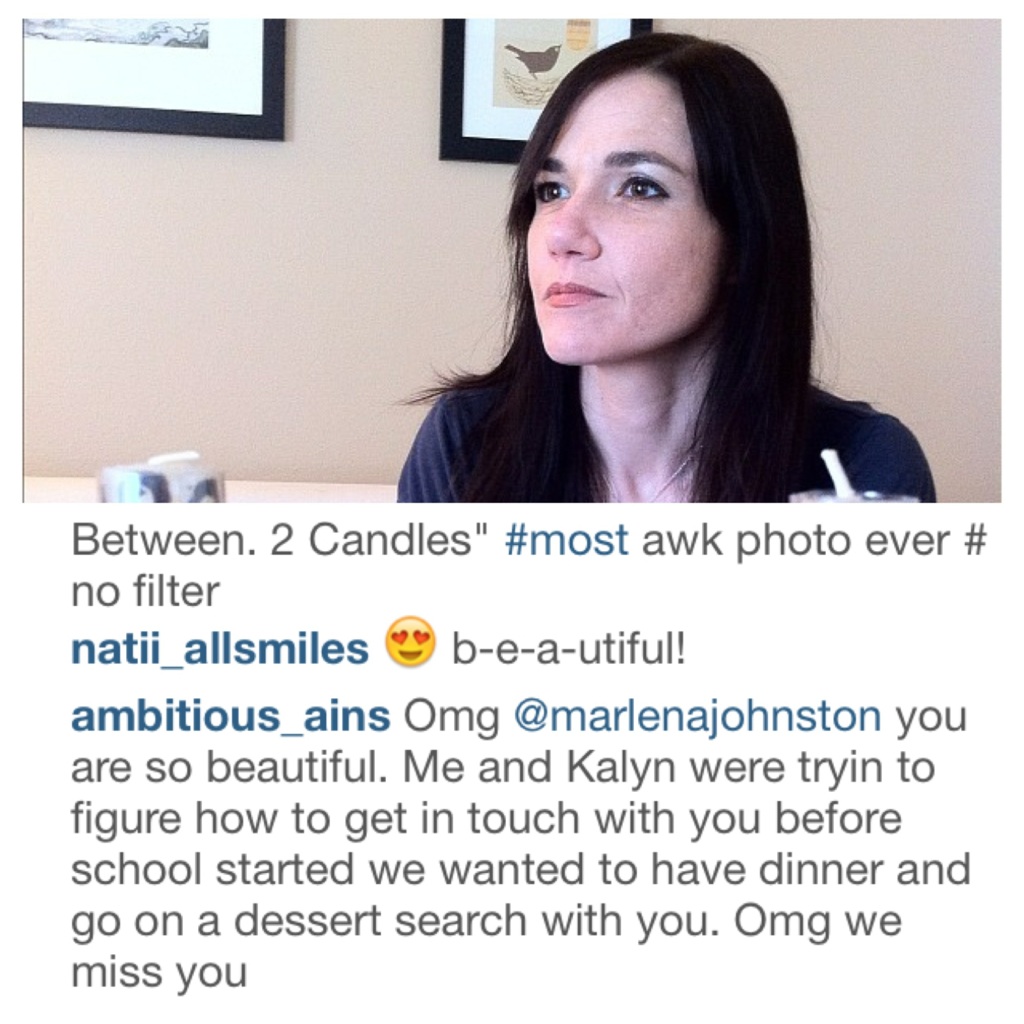
This comment (on a recent Instgram photo my sister took of me) is from one of my students whom I had for Jr and Sr year... he and his best friend Kalyn recently told me, "we miss you like a child misses his mother" - such wonderful kids

Tuesday, August 14, 2012

Fashion Forward

"Fashion is not something that exists in dresses only. Fashion is in the sky, in the street, fashion has to do with ideas, the way we live, what is happening" - Coco Chanel 


I've lost weight. Usually every woman would turn green with envy at that statement... but not when it's part of a "constellation of weird symptoms" of an unknown illness. It's been hard to be independent because of the pain, and it's even harder to drag yourself out of your apartment when literally you have nothing to wear.

Enter two of my amazing students - Cody and Sam - who were both in my 12th grade World Literature Honors course last year. Last week, they became my personal shoppers for the day. We ravaged "Forever 21" as they grabbed dozens of clothes from the racks, and then stood patiently outside the dressing room as I tried on dress, after dress, after dress. We got some good finds, and then I treated them to a post-shopping dinner at California Pizza Kitchen.

Chipotle Chicken Pizza: spicy chipotle sauce, chicken, mild chilies, mozzarella and enchilado cheese - topped with roasted corn, black bean salsa, cilantro and lime cream sauce. GENIUS!

The day made me feel "normal" again...  as my friend Joe told me, "You gotta get out in the world... you can't just feel like an ugly pair of shoes shoved in the back of the closet." Just picking out some clothes for the upcoming school year, and doling out relationship advice to my girls, made me feel more determined than ever to get well enough to return to teaching this fall.

When I was in Sloan Kettering for the week after surgery, I participated in a patient "make over" by "Look Good... Feel Better", which is an organization dedicated to helping women with cancer feel better about their physical appearance. Their philosophy is simple: a woman's self-esteem is ravaged by disease, and by helping women feel better about how they look, patients feel more hopeful in all aspects of their fight. This may at first sound vain, but there is real science behind it supporting the organization's mission. My little mall make-over did exactly that for me - made me more hopeful.

So a special thank you to my girls for not only helping me feel better about how I look, but for also helping boost my determination that I will be able to get back to doing what I love most - helping my students in their own journeys - using literature as a vehicle for self exploration.

Sunday, April 17, 2011

Namaste, Yogadesha

"Faith is taking the first step, even when you don't see the whole staircase." Martin Luther King, Jr.

This past Sunday, I walked into a yoga studio for the first time in over three years. I have been threatening to get back into yoga ever since I moved to NJ, but it wasn't until a wonderful friend of mine arranged a private lesson for me at Yogadesha (Montclair, NJ) that I made good on my threats.

The word "yoga" is derived from the Sanskrit word "yuj", which basically means to unite. My yoga instructor, Rebecca Bergstrom, reaffirmed this basic philosophy as she explained that "yoga is not about self-improvement; it's about self awareness." Put another way, everything you need to conquer your fear, anxiety, pain is already inside of you - yoga is just a means of access.

I understand, respect and admire the proven benefits of yoga. There is little doubt that this ancient Indian practice, which is over 26,000 years old, has helped millions of people overcome countless physical and emotional ailments -- and there is plenty of scientific evidence documenting how meditation can change brain patterns to relieve pain.

But it's sort of like obeying the posted speed limits on the freeway -- a good idea, but who has time for that kind of cautious self-indulgence? I guess the answer is: I have to make the time.

My instructor, Rebecca, studied biology and psychology at Stanford University, and dance with Martha Grahm. She turned to yoga as a means to cope with the death of her young husband - when she was pregnate with her first child. She has the highest level of certification, and has helped people with ms, cancer, fibromyalgia, and other long term health concerns - and she most definitely has helped me.

Yoga classes typically start and end with the teacher and students bowing to one another, repeating the Hindi salutation "Namaste", which is a combination of two Sanskrit words: nama ("to bow") and te ("you"). So literally, "Namaste" translates to "I bow to you" - or more loosely translated, "The spirit in me respects the spirit in you." The spirit is the one thing that Western medicine largely ignores, even though it is a critical component in any recovery - especially from a physical trauma such as cancer.

"Trauma" is the Greek word for "a wound" (and for "damage or defeat"). I have had lots of physical damage and defeats over the past year, all of which are easily described ... but some of the emotional wounds my treatments caused are a bit harder to recognize and define - even for myself.

After giving Rebecca a complete account of my surgeries, treatments and testing, as well as a summary of my current levels of physical pain, we began working by having her touch certain key points on my body to heighten my awareness.

Before she began, she asked "do you mind being touched?" and I gave her the reply I give all my doctors and nurses these days, "do whatever you want, I've been poked, prodded and stuck by so many people so many times that I have no humility left"... And she stopped and said "what a trauma". I never thought of THAT aspect of my treatment as "traumatic" but her acknowledgement of how difficult it is to not have control over your own body brought on a flood of emotions: anger, resentment, loss, self-pity, courage ... all at once. The next 45 min were about control - my control of my body. It was amazing.

I'm definitely going to take her Wed "breath centered" yoga classes and find a yoga studio by me. It's a first step toward a different kind of healing - a step I'm taking despite not being able to see "the whole staircae" - it's about faith... in myself.

Friday, August 27, 2010

Wafels & Dinges NYC

We had an appointment with Dr. Nash yesterday, who thought the wound looked absolutely fantastic, but told us to keep packing it until it completely closes. He also said that I no longer need to follow a low fat, low residue, low fiber diet - but to take it slow.

So what was the first thing Gary and I did when we left Sloan-Kettering's Manhattan office? We hunted down this legendary Belgian waffle truck, Wafels & Dinges, for my first post-surgery taste of raw fruit: strawberries.

I ordered a liège wafel (soft / chewy) covered in fresh strawberries and a tasty addictive spread called speculoos, which has the consistency of smooth peanut butter but tastes a little like gingerbread and caramel. As they say in Belgium: mmmmmm .... lekker*!

Now, I don't necessarily think this sinful treat was what Dr. Nash had in mind when he said, "take it slow", but in my defense - he did say to gradually start incorporating fruits and vegetables back into my diet, so why not eat some strawberries in style?


*lekker = (Dutch) adv. deliciously, with wonderful taste or smell; adj. delicious, tasty

Wednesday, August 25, 2010

Packing Progress: Wound Care

I'm home from vacation, and tomorrow we see Dr. Nash. Hopefully, he will tell us that my wound is healed enough to stop packing.

Wound Care 101

To recap: the incision from my laparoscipic right hemicolectomy got infected, so Dr. Nash had to re-open the wound. An open wound needs to be kept open, otherwise the top layers will heal over before the rest of the wound can close - creating a little pocket just ripe for infections.

In order to allow the wound to heal in layers, from the bottom up, you keep it open by packing it with sterile gauze. "Packing" a wound is exactly what it sounds like - you just shove as much gauze into the wound as will fit. This packing helps to fill open space, maintain a warm moist environment, and absorb drainage.

How much packing do you use? That depends on how deep the wound is. Initially, my wound took about 2 feet of packing (picture taken on July 30, 2010).


As the wound healed, it became more shallow and the amount of packing we had to use got less and less. Also, we did everything to accelerate the healing process, including changing the packing twice a day and increasing my protein intake.

Today, less than a month after it was re-opened, we can hardly fit more than a couple of inches of packing into the wound. The body's ability to heal is nothing short of miraculous, and I am grateful that we are almost over this little bump on the road to recovery.

For More HELP in wound care: visit the WOCN.org website.

Founded in 1968, the Wound, Ostomy and Continence Nurses Society (WOCN) is a professional, international nursing society of more than 4,600 healthcare professionals who are experts in the care of patients with wound, ostomy and incontinence.

Tuesday, August 10, 2010

Note to Self...


If children have the ability to ignore all odds and percentages, then maybe we can all learn from them. When you think about it, what other choice is there but to hope? We have two options, medically and emotionally: give up, or fight like hell. ~Lance Armstrong

I am fighting against becoming someone I'm not - someone who is afraid that when they wake up, there will be a new hurt to deal with; someone who doesn't want to leave the house for fear that they will become sick in public; someone who scrutinizes every twinge and pain for a sign that something is wrong.

Cancer is a betrayal by our bodies - and carcinoid cancer is long-term betrayal. Although carcinoid malignancy rates are widely debated in the medical community, many estimate that it takes on average 3-5 years for a neuroendocrine tumor to reach 2cm. My tumor was 3cm, so it must have eluded detection for years - maybe even a decade. How can I trust my body anymore to, as Spike Lee would say, "do the right thing"? I guess the answer is, I can't - none of us can. All we can do is try our best at prevention and healthy living, and hope that the doctors and medical field continue to make advances in early detection and treatment.

However, while I may have limited control over my physical well-being, I have complete control over my psychological and spiritual well-being. I truly believe that happiness is a choice, and not something that just happens to us. I can choose to face the day with fear or with fervor; with weakness or with strength. Lately, I've let my emotions drift from the safety and joy of the "now" to unfounded future anxieties and scary memories of the past. Today, I'm going to have ice-cream and go for a walk, and smile because I know that simply breathing means - anything is possible.


Friday, August 6, 2010

Keep On Keeping On


The toilet. It is the one place that every single person on the planet must visit several times a day, and the one place that is never spoken about in polite company. In fact, we are so embarrassed by our natural need to eliminate waste from our system, that we have invented "code names" for the places where we keep toilets (washroom, loo, bathroom, powder room, water closet, little girl's or little boy's room, restroom), and use fans, sprays, and scented candles to mask any evidence of us having been there. In fact, some public toilets are now automated to flush for you, so that you can escape from your up-right coffin sized cubicle with less trauma.

Public toilets. I remember one of the most surprising aspects of volunteering in New Orleans right after Hurricane Katrina was the port-o-potties. Without running water, whole parts of the city were forced to use these temporary outdoor toilets, perched on every corner, which became so full that people began putting clothes and rags on top of the overflowing piles of excrement to avoid having to come in contact with feces - creating this weird, awful layered monstrosity. There was a lot about New Orleans that was crazy to comprehend during that time, and such a simple dignity that most of us take for granted was just one of the many hardships that resilient city faced.

Similarly, in the world of cancers involving the digestive system, the toilet is no longer a quiet, private and dignified place. Whether or not you are peeing, farting or pooping is the topic of conversation with every doctor or nurse who you come into contact with. And if that weren't embarrassing enough, you actually have stuff to talk about. For example, prior to surgery (and certain procedures), you are forced to gag down glass after glass of a mixture best described as salty mucus to "empty your bowels" - violently. Prior to office visits, you sometimes need to use a Fleet enema - so you learn to buy the Fleet two-pack to avoid multiple trips to the pharmacy, since the cashier always tries just a little too hard to look nonchalant while ringing you up. In the hospital, if you can't urinate, you get a tube shoved up you. It's not a fun world, and sort of like the port-o-potties of New Orleans, it's an aspect of cancer that rarely makes front page news.

For me, just when things were starting to work as they should, "in the toilet", I woke up yesterday with a horrible UTI (urinary track infection). Truth be told, it's actually the second UTI I've gotten since I left the hospital, and I'm more than just a little annoyed. The first infection (July 31) I was able to treat with a gallon of cranberry juice; this time - cranberry juice wasn't working, so I had to call Dr. Nash, again.

As I dialed his office's number, I began to feel like "that patient" - the one who always is complaining or has a problem; but the on-call nurse was as nice as pie, and faxed in an order to the local lab, where unfortunately Gary and I spent our Friday afternoon. Even though the official lab results won't be in until Monday, Dr. Nash called in a prescription antibiotic to start immediately, which personally I'm very grateful for. I picked up some AZO and the prescription, and after whining (a lot) to Gary, I finally fell asleep.

I know that on the grand scale of things, this latest minor setback is a blip. Just like there were much worse realities in New Orleans than the toilets (ninth ward, exploitation of illegal workers, lost court records, lost hope), there are much worse realities in battling cancer than a UTI; but it's these little indignities that begin to drain your resolve. Someone once wrote: "anyone can survive a crisis; it's the day to day living that gets us down". There is some truth in that - after the "get well" bouquets have wilted, and the mail returns to the normal bills and super savers instead of colorful envelopes from well wishers, there is the everyday living to be done. So that's what I'm doing now - trying to "keep on keeping on" - with Jackie -O in mind.


Thursday, August 5, 2010

Dr. Appointment and Pierogies

My Post-Appointment Lunch in the East Village
Veselka
144 2nd Ave NYC

Yesterday, I had my follow-up appointment with Dr. Nash, who checked my wound. He said that it looked like it was healing nicely, and was more shallow than last week. He estimated that it will take another few weeks to fully heal, and wants to see me again next Thursday. I'm really glad that Dr. Nash is continuing to see me every week, it gives Gary and I a lot of peace of mind.

After my appointment, we went to our favorite Ukrainian diner for lunch: Veselka. If you've never been to Veselka - GO! The food is amazing. So, while we enjoyed our usual meals (Gary: stuffed cabbage vege combo; me: pierogies), we reviewed what we learned today from the nutritionist / nurse, Rachael (another nurse - whom we absolutely adore) and Dr. Nash.

1. Dr. Nash never got a copy of the pathology on the three small polyps that were removed by Dr. Maloney during my colonoscopy - he will follow up this week. Most likely, if I didn't hear anything, the pathology came back clear. Interestingly, I found out that the polyps were not in the part of my colon that was removed during surgery.

2. The most likely place for the carcinoid cancer to reoccur is in the lymph nodes or liver.

3. The best screening method for carcinoid tumors is regular CT scans; blood markers are too inconsistent for any meaningful results, and CT scans have gotten so good that they are now considered superior to octreoscans.

4. Some of the medical literature suggests a tenuous connection between gastrointestinal carcinoid tumors and an increased risk for other types of cancers, such as colon cancer; because of this, a colonoscopy should be preformed every three years instead of every five.

5. I should finish the entire 30-day supply of Pantoprazole (reduces stomach acid, thereby decreasing the risk of a stress ulcer) and follow up with my primary care doctor if I experience any reflux after I stop the medication.

6. I can take nausea medication for as long as I need to. The medication that works best for me is Ondansetron 4mg (Zofran), which dissolves under your tongue. I have also tried Metoclopramide 10 mg (Reglan) with minimum success. There doesn't seem to be any issues with safety - both are good for long-term use and have few side effects, it's just a matter of which one works. (Fun Fact: Reglan can also be used to treat hiccups.)

7. I can slowly introduce a few fibrous foods into my diet, like smooth peanut butter or a small salad, and adjust my Colace (100 mg up to 3x a day) accordingly. It is very important that I eat protein, which will help speed the healing process for my wound. In this regard, I confirmed that I CAN EAT SUSHI (even the seaweed)! YES!

8. Since I am off the prescription pain meds (as of Tuesday), I can test whether or not I'm able to drive by getting into the car and pushing down as hard as I can on the breaks - if it hurts, I can't drive and vice-versa.

Just a note on pain meds - there are different options out there, and in connection with my past two surgeries I have tried: Hydromorphone 2mg, Vicodin 5/500 mg, and Percocet 5/325 mg. Out of these three, the only one that works for me is Hydromorphone (Vicodin does not kill the pain and Percocet just makes me loopy). Also, it didn't take me that long to switch from Hydromorphone over to Advil for the pain (I averaged 4-5 pills a day right after surgery, and decreased the amount by one pill every three days, so I only had to be on the "heavy duty" stuff for 9 days following discharge).

9. There is no problem with Gary and I going to the beach as long as I only go in the water for a short period of time (10-15 min) and immediately rinse off and repack the wound when I get out.

10. Since nearly all exercise involves your core muscles, I should wait about 8 weeks before resuming any exercise routine.

Overall, everything was good news at the appointment, and it feels like I'm slowly getting back to my old self.

Wednesday, August 4, 2010

Questions for Dr. Nash


Tomorrow I see Dr. Nash, who will check my wound. As usual, I have more than a few questions written in my little red moleskin for him; but perhaps none so pressing as this one: can I eat sushi? Afterall, a girl cannot live by pastina and cream of wheat alone.


- Posted using BlogPress from my iPhone

Tuesday, August 3, 2010

Haiku for a Discarded Shower Chair


elephant grey chair
sits all alone, as I stand
in warm shower rain

- Posted using BlogPress from my iPhone

First Night Out with Friends

"It's what you have to do with every disease: act like you don't have it and keep on going." - Angelo Dundee on Muhammad Ali's "pugilist's syndrome"


Tonight, Gary, Chris, Christine and I attended a Q&A format appearance by film director / writer / actor Kevin Smith aka Silent Bob (Clerks, Dogma, Chasing Amy, Mallrats, Cop Out) at the Count Basie Theater in Red Bank, NJ.

Smith was born and raised in Red Bank NJ, and today is his 40th birthday (thus, the free rally towel).

I have never seen Smith before, but his Q&A appearances are legendary. There is no doubt; the man is a master storyteller, and when we left -- 4.5 hours after he started-- the place was still packed, and still erupting in clapping and laughter. It was fantastic.

Location:Red Bank, NJ

Saturday, July 31, 2010

First In-Home Nurse Visit

VNACJ Nurses of the 1930s

The Visiting Nurse Association of Central Jersey (VNACJ) began with a meeting of volunteers on June 24, 1912 at Brookdale Farm, and has since evolved into one of the premier providers of community health care services.

Madeline, our VNACJ nurse, arrived today around 11:00 am. She was absolutely terrific, and couldn't have been nicer. In addition to redressing the wound, she answered some of our questions:

Q: If my wound was infected, why wasn't I prescribed antibiotics?
A: I did not have a fever which meant that the infection was most likely localized, and therefore the entire body did not need to be treated with antibiotics.

Q: What is the purpose of reopening the wound?
A: Usually wounds heal from the inside out, but in my case the wound healed in reverse: basically the top external portion healed over before I was internally healed - creating a "pocket" where infections can occur. The point of the packing is to keep the wound open so that the inside can heal fully.

Q: How will this wound eventually close - do they just sew it up?
A: It's unlikely that I will need stitches. Most likely, as the wound heals, the doctor will decrease the amount of packing, until eventually all of the packing will be removed. The entire wound will then be covered by a bandage, and the body should naturally heal the wound close.

Since Gary did such a great job redressing the wound, she feels that a nurse is not needed every day (and we agree). I am scheduled to receive two more in-home visits next week: Monday and Friday. She really provided some peace of mind, and Gary and I are much more confident that we can tackle this latest hurdle.

Friday, July 30, 2010

Whoa!! I was NOT expecting that!

Cancer has been a land of "firsts" for me: first MRI, first CT, first endoscopy, first bowel prep, first anoscopy, first sigmaoidoscopy, first colonoscopy, first surgery (ever), first foley catheter (you get the picture).

Today was another first - the first time we had to change my wound dressing. We started by reviewing our notes from yesterday's appointment (we have a small red moleskin notebook that we take to every appointment):

Step One: remove the old bandages and packing
- peel away the very outer bandage of sticky gauze
- remove the two squares of dry gauze
- using the tweezers, remove the approx 2 foot strip of "packing" that is stuffed into wound

In the mornings, I am supposed to take a shower between steps one and two; and let the wound get soapy water into it.

Step Two: repack the wound
- cut a 2 foot strip of packing
- soak the packing in saline, and ring out excess water
- using the long cue-tips, pack the wound - leave a little bit sticking out
- place two squares of dry gauze over the packing
- cover with a bandage of sticky gauze

Next, we laid out all of our necessary "equipment" on the bathroom counter: tweezers, scissors, "packing", gloves, extra long q-tips, bandages and saline (mise en place baby).


We decided the process would work best with me lying down, so after I was comfortably resting on a towel in bed, Gary removed all of the dressing perfectly; and when he was done, I looked down and saw the wound, for the first time.

You see, I was so nervous yesterday that I didn't look at what Dr. Nash was doing when he was re-opening my wound (I basically just squeezed the stuffing out of Gary's hand and closed my eyes). In my mind, I guess I pictured a couple stitches being cut away, revealing a dime-sized hole which was then packed with a little gauze.

So when I looked down, I was shocked to find that Dr. Nash had taken ALL of the stitches out, and there was a 1.5" gaping slash in my gut. I have never seen anything like it. Since the wound had been stretched open by the packing, it looked as if I was actually missing a chunk of my body (like a shark bite).

Immediately, I felt this overwhelming sense of panic wash over me, and I began uncontrollably sobbing, only momentarily stopping to choke out the same sentence, over and over again: "I don't think I can do this". It was the first time I was really scared since my diagnosis.

Gary calmed me down and suggested that we just put a very loose bandage over the wound so I wouldn't have to see it as I took my shower. It was a brilliant idea. Although still crying, I was able to take my shower and Gary expertly repacked the wound.

Now that the shock has worn off, I have "regrouped" as my mother would say. I still feel a little self-doubting, but I know in my heart that I CAN do this; I just need to work on some breathing and visualization techniques for the next "first" can catch me unawares.

"I know God will not give me anything I can't handle; I just wish that He didn't trust me so much." ~ Mother Teresa

Thursday, July 29, 2010

Warning! Not for the Squeamish

Cancer patients and doctors often speak in terms of percentages (survivor percentages, staging percentages, recurrence rates, etc). Even the treatments themselves carry risk factors.

Fact: On average, only about 10% of abdominal surgical wounds become infected (this percentage is lower at Sloan-Kettering).

In my case, we did everything possible to reduce the risk of infection. Firstly, I was instructed to take a shower the night before and morning of my surgery, using nothing but Hibiclens Antimicrobial and Antiseptic Skin Cleaner Liquid to reduce the risk of infection. Secondly, Dr. Nash was able to laparoscopically remove the 20 lymph nodes and foot of colon through one small incision, thereby decreasing the risk of infection. Finally, during surgery, antibiotics were administered.

However, it is impossible to completely eliminate the risk of infection with this kind of surgery, and despite these efforts, my wound still became infected.

Yesterday morning, I was washing my hands at the bathroom sink when I noticed the front of my shirt, by my incision area, had some light blood stains on it. When I lifted up my shirt for a closer look, clear liquid began trickling through the translucent surgical adhesive and down my abdomen. I called Gary in to look at it, and we were able to stop the drainage by having me lie down and gently blot the area with a tissue.

We called Dr. Nash's office and sent them a picture from Gary's iphone (photo on left). Based on our description and photo, Dr. Nash said I'd better come in.

To be honest - I thought the wound looked pretty good, and I was being over-cautious; however, as soon as Dr. Nash saw it he was able to determine that it was indeed infected, and the wound would have to heal from the inside out.

He explained that the redness around the wound, in addition to the fluid build up, were signs of infection. He then removed the clear, surgical adhesive patch (looks shiny in photo), reopened a portion of the wound (cut away stitches) and drained it. Afterward, he stuffed the "hole" with gauze. Finally, the entire incision was covered by gauze.

Dr. Nash informed us that this "dressing" would have to be changed twice a day. Gary was trained so that he will be able to change the dressing in the morning, and the office is going to arrange with my insurance for a home-care nurse to come and change my dressing in the afternoon.

Lessons Learned:

1. Use your iphone (or any camera phone) to digitally send pictures to your doctor if you think something is wrong.

2. Always error on the side of caution.

3. Don't rely on objectively concrete statistics when it comes to managing your own personal health care.

Sunday, July 25, 2010

First Night Home

I am so happy to be home. There is nothing better than lying in bed, typing this blog, watching "Criminal Minds" and knowing that any second Gary is going to come home from grocery shopping for our new and interesting culinary adventure in low fiber, low residue, low fat cooking. (We are going to be posting any successful recipes.)

Couple of notes about the ride home: the NJ Turnpike is NOT the smoothest ride with a healing 1.5 inch incision in your gut. Also, it's a good thing to take anti-nausea meds BEFORE you get in the car.

I'm going to be working on the blog over the next few days - even my old posts...so tune in often.

Thursday, July 22, 2010

Guest Blog Post: Gary

Great News!!! Mar's pathology reports are back and there was NO CANCER in either her lymph nodes or her colon. We are beyond thrilled - now we can focus on recovering from surgery with a clear mind. WOO HOO!!!